When to Repair Instead of Replace Gutters in Hackettstown

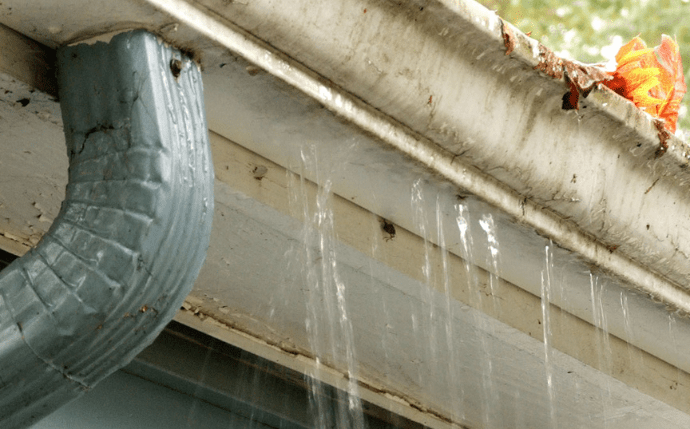
Gutters rarely get much attention until they fail at the worst possible moment, usually during a hard rain when water starts pouring over the front entry, dripping behind the fascia, or carving channels into the flower beds. In Hackettstown, where homes see heavy spring rains, summer storms, fall leaf buildup, and winter freeze-thaw cycles, gutter problems tend to build slowly and then show up all at once.
The question homeowners ask is usually simple: should you repair the gutters you have, or is it time to replace the whole system?
The honest answer depends on age, material, extent of damage, roofline layout, and whether the problem is isolated or systemic. I have seen gutters that looked rough from the ground but only needed a few fasteners, a resealed corner, and a downspout correction. I have also seen runs that were patched so many times that another repair would have been money thrown at a failing system.
If you are trying to make a smart decision about Gutter Repair Hackettstown services, it helps to know what can usually be fixed, what tends to keep coming back, and what signs point to full replacement instead.
Why gutters in Hackettstown fail the way they do
Local conditions matter. A gutter system in a dry climate ages differently than one in northwestern New Jersey. Hackettstown homes often deal with a combination of tree debris, wind-driven rain, snow loads, and ice. Add in older housing stock, uneven fascia boards, or previous DIY work, and small defects can turn into recurring leaks.
A typical example is the back gutter on a house shaded by mature maples. In late fall, the trough fills with wet leaves. Water dams behind the debris, freezes overnight, and adds weight to hangers already loosened by years of expansion and contraction. By spring, the homeowner notices a drip at one corner and assumes the corner seam is the whole problem. Sometimes it is. Often, the seam failed because the run is pitching the wrong way or pulling away from the fascia.
That is the central issue with gutter repair. You are not only fixing the visible symptom. You are deciding whether the underlying structure still deserves investment.
Repair makes sense when the problem is isolated
A good gutter system does not need to be perfect to be worth saving. If most of the gutters are structurally sound and only one or two components have failed, repair is often the practical move.
Small leaks at seams or end caps are a common example. Sealants dry out over time, especially where sunlight hits for years. If the metal is still solid and the joint has not deformed, cleaning the area and resealing it can buy meaningful life. The same goes for a single downspout that has come loose after a storm. Reattaching straps, correcting alignment, and making sure the discharge moves water away from the foundation is routine repair work, not a reason to replace everything.
Sagging sections also fall into the repair category when caught early. Gutters can pull away because hangers loosen, spike-and-ferrule systems back out, or fascia boards soften slightly in spots. If the run itself is not twisted or split, new hidden hangers and selective fascia repairs can restore proper support.
Here are the kinds of issues that often justify repair rather than replacement:
- a few leaking seams or end caps
- one or two loose or sagging sections
- detached downspouts or bent elbows
- minor rust in a limited area, if the surrounding metal is still sound
- clogs and overflow caused by debris rather than structural failure
Those are fixable defects. The key phrase is "limited area." If the same condition shows up along multiple runs, the decision starts to change.
The age of the gutter system matters, but not in a simplistic way
Homeowners often ask for a number. How many years should gutters last? The reality is a range, not a deadline. Aluminum systems can last a couple of decades or more if installed well and maintained. Steel can perform well too, though rust changes the equation. Copper lasts much longer, but it is less common and usually treated as a premium system worth preserving.
Age by itself is not enough to justify replacement. I have inspected fifteen-year-old gutters that were in worse shape than thirty-year-old ones because the newer system had poor pitch and undersized downspouts from day one. I have also seen old gutters that looked weathered but were still mechanically sound.
What age does tell you is how much confidence you should have in a repair. If a twenty-five-year-old aluminum gutter develops one leak, a repair may still be worthwhile. If it develops one leak this spring, another in midsummer, then a sagging front run in the fall, age becomes part of a pattern. At that point, you are not preserving a solid system. You are chasing failures.
A useful way to think about it is this: repair is strongest when it solves a clear, contained problem. Replacement becomes more logical when each fix uncovers the next weak spot.
Signs that repair is the right call
The best candidates for repair usually share three traits. The damage is limited, the gutter still holds shape, and the fascia or roof edge behind it has not suffered extensive water damage.
Take a front elevation where one corner leaks during intense storms. On inspection, the run is properly pitched, the bottom is solid, and the corner seam has simply opened up. That is a straightforward repair. Another common scenario is a downspout that dumps too close to the foundation. Extending or rerouting the discharge solves a water-management problem without replacing the whole system.
Sometimes the visible issue is cosmetic. Dents from ladders or a branch strike can look alarming from the driveway, yet have little effect on performance. If water still flows correctly and the metal has not cracked, replacing a short section may be enough.
Repairs also make sense when the rest of the system was installed properly. Seamless gutters, for instance, often outlast spot failures. If the custom-formed runs are still secure and correctly sized, it is usually smarter to repair the trouble area than rip out functional lengths.
When replacement becomes the more economical decision
There is a point where repair stops saving money. Homeowners do not always recognize it because each individual fix seems affordable. A seam repair here, a rehang there, one short replacement on the garage, then another service call after the next storm. Added together, those smaller invoices can approach the cost of replacement without delivering the reliability of a new system.
Widespread rust is one of the clearest signs that replacement is due. Surface oxidation in a small patch can sometimes be addressed. Rust-through, pinholes, flaking metal, and soft spots in multiple areas mean the material is deteriorating from the inside out. Sealant cannot restore lost metal.
The same logic applies to repeated sagging. If several sections are pulling away, there may be more going on than bad hangers. Fascia damage, improper spacing, trapped ice weight, or long-term standing water may have compromised the support structure. At that stage, resetting one section often leaves the next one ready to fail.
Replacement is also usually the right choice when the original design is wrong. I have seen homes where the gutter size was too small for the roof area, or where there simply were not enough downspouts. In those cases, overflow during heavy rain is not really a repair issue. It is a capacity issue. You can patch leaks all season and still get water washing over the edges in every major storm.
The hidden factor: fascia, soffit, and roof edge condition
A gutter can only perform as well as what it is attached to. This is where many quick repair decisions go sideways. The gutter may be salvageable, but if the fascia behind it is rotted, split, or no longer holding fasteners, repair becomes more involved.
This matters a lot in Hackettstown because winter ice and trapped debris can hold moisture against the roofline for long periods. From the ground, you may only notice peeling paint or a slight droop. Once the gutter comes off, the wood behind it may tell a different story.
If the underlying wood damage is localized, repair still makes sense. Replace the affected fascia section, install proper hangers, reseal the gutter, and restore pitch. If the damage extends across long stretches, especially on multiple sides of the home, it often makes more sense to replace the gutters after the carpentry is completed. Reinstalling aged, borderline material onto fresh fascia is not always a wise use of labor.
This is one reason a thorough inspection matters. Decisions made from the lawn are often too optimistic.
Seamless versus sectional gutters changes the calculation
Not all systems age the same way. Sectional gutters have more joints, and every joint is a potential leak point. Seamless gutters reduce that vulnerability along straight runs, though corners and end caps still need attention.
If a sectional system in Hackettstown has several leaking joints and recurring separation, replacement with seamless gutters may offer a long-term improvement rather than just a reset. On the other hand, if you already have seamless gutters and only one corner or outlet is failing, repair is often very reasonable.
Material also matters. Aluminum is common because it balances cost, corrosion resistance, and ease of installation. Steel is tougher in some respects but less forgiving once rust gets established. Older vinyl systems can become brittle, especially after years of seasonal temperature swings. When vinyl starts cracking in several places, replacement is often more sensible than chasing piece-by-piece repairs.
Overflow does not always mean the gutters are bad
A lot of homeowners assume overflow means they need new gutters. Sometimes they do. Often they need cleaning, pitch correction, or improved drainage layout.
Overflow in one spot during a thunderstorm can mean a clog at the outlet. Overflow along an entire run can point to undersizing, poor slope, or too few downspouts. Water spilling behind the gutter may indicate a drip edge issue or a gutter set too low relative to the roof edge.
I remember a house where the owner was ready to replace everything because water sheeted over the front gutter in every hard rain. The trough itself was still solid. The real issues were packed debris in the outlets, a low spot in the middle of the run, and splash-over from a steep roof section dumping too fast for the existing downspout layout. Correcting pitch and drainage solved the problem for a fraction of full replacement.
That is why diagnosis matters more than assumptions. Similar symptoms can come from very different causes.
A practical way to judge repair versus replacement
If you want a field-tested way to think about the decision, focus on condition, extent, and recurrence. Ask whether the gutter is still fundamentally sound, how much of the system is affected, and whether the same issue keeps returning.
This quick framework helps:
- repair if the problem is isolated and the rest of the system is stable
- replace if multiple runs show rust, separation, sagging, or chronic overflow
- lean toward replacement if repair costs are stacking up within a short period
- consider redesign, not just replacement, if capacity or downspout placement is wrong
- inspect fascia and roof edge before deciding, because hidden damage changes the scope
That may sound obvious, but it keeps homeowners from making two common mistakes. The first is replacing too soon because one visible defect looks dramatic. The second is repairing too long because each service call seems smaller than a replacement quote.
Seasonal timing in Hackettstown can influence the decision
Timing affects both urgency and cost. In late fall, many gutter problems are exposed by leaf buildup, but that is also when schedules tighten as homeowners rush to prepare for winter. During freezing months, some repairs become temporary by necessity because sealants and materials do not always cooperate in cold conditions.
Spring is often the best season to evaluate the full picture. Snow and ice have come and gone, water is moving, and damage becomes easier to see. If gutters survived winter but now show leaks, separation, or fascia staining, spring inspections can catch issues before summer downpours and before next winter locks in more damage.
That said, a failing gutter should not wait just because the calendar is imperfect. Water spilling at the foundation, saturating siding, or soaking entryways can create bigger problems quickly. A timely repair now can preserve options later. Waiting too long often removes the repair option altogether.
The cost question homeowners really mean to ask
Most people asking about repair versus replacement are really asking whether the lower upfront price will hold. That is the right question.
A modest repair can be an excellent value if it buys several more years of dependable service. The same repair becomes a poor value if it only delays replacement by a single season while allowing water damage to continue. The numbers depend on the home and the system, but the principle stays the same: compare the remaining life you are likely to get, not just the invoice in front of you.
For example, resealing one leaking corner on a sound gutter system is usually money well spent. Rehanging a badly twisted run with rusted fastener holes and soft fascia behind it is often not. The first case restores performance. The second case may simply postpone failure.
This is where experienced judgment matters more than generic rules. A contractor who jumps straight to replacement on every job is not helping you. Neither is one who promises repairs on material that is clearly near the end.
What a good inspection should uncover
A proper gutter assessment should go beyond visible leaks. It should look at pitch, hanger integrity, seam condition, discharge location, fascia soundness, signs of standing water, and evidence of overflow behind the system. It should also account for the roof shape and drainage load.
On some homes, one side takes far more punishment than the others. South-facing runs may age differently from shaded areas under dense tree cover. Valleys can concentrate water into a short length of gutter and overwhelm it during cloudbursts. Garages and additions often reveal mismatched work from different eras.
For homeowners seeking Gutter Repair Hackettstown service, this is the difference between a targeted repair and a guess. A good inspection explains why the problem happened, whether it is isolated, and what likely comes next if you choose repair instead of replacement.
Guard systems can help, but they do not rescue failing gutters
Gutter guards have their place, especially on tree-heavy properties, but they are not a cure for structurally failing gutters. If the system sags, leaks at seams, or has poor pitch, covering it with guards will not fix those flaws. In some cases, guards on a failing system can make maintenance harder by hiding buildup or adding weight.
When the underlying gutters are sound, guards may reduce clogging and extend service intervals. When the underlying gutters are compromised, repair or replacement should come first.
That distinction matters because homeowners are sometimes sold accessories before the base system is stable. It is like putting new tires on a vehicle with a bent axle. You may see https://ameblo.jp/josuetaqc634/entry-12979083506.html an improvement for a while, but the core issue remains.
The call to make before the next major storm
There is a narrow window where repair gives the best return. Catch the problem early enough and you preserve the system. Wait until leaks spread, wood softens, and runs deform under weight, and the decision shifts toward replacement.
For many Hackettstown homes, the right answer is not dramatic. It is a measured repair that addresses a seam, a pitch issue, a set of hangers, or a downspout configuration before those smaller defects create collateral damage. For others, especially older systems with repeated failures, replacement is the more disciplined financial choice.
If you see isolated leaks, a short sagging section, or one misbehaving downspout, do not assume the whole system is finished. If you see recurring overflow, widespread corrosion, multiple failing joints, or water damage along the roof edge, do not assume another patch will solve it.
Good gutter decisions are rarely about optimism or worst-case thinking. They are about reading the system honestly, understanding local wear patterns, and choosing the option that protects the house rather than postponing the inevitable. In Hackettstown, where weather gives gutters a real workout, that kind of judgment pays for itself.
Just Gutters LLC
Address: 262 Main St, Hackettstown, NJ 07840
Phone number: +12013319454
FAQ About Gutter Repair Hackettstown
What is the average cost to repair gutters?
The average cost to repair gutters is about $390, with most jobs ranging from $120 to $900 depending on the damage. You can explore detailed data and estimates on Angi.
Can I repair a gutter myself?
Yes, you can easily repair most common gutter problems yourself if you are comfortable working on a ladder.
How much does it cost to repair a leaking gutter?
The average cost to repair a leaking gutter ranges from $75 to $350. Most homeowners spend around $150 to $250 to hire a professional to patch small holes or reseal leaking joints. If the damage is severe and requires replacing entire sections, the price can increase from $300 to $800.